Calculadora de Horas
Time management is an important part of both professional and personal life. Employees need to know how many hours they work each day, while freelancers and business owners often need to track time spent on different projects.
Although calculating working hours may seem simple, it can become confusing when breaks, minutes, overtime, or overnight shifts are involved. A reliable calculadora de horas online can make these calculations easier and help users understand their schedules more accurately.
Accurate time tracking is particularly useful in Brazil, where businesses and employees often need to maintain organized records of working hours. A simple calculation can help prevent mistakes and provide a clearer picture of how time is being used.
Why Is Tracking Working Time Important?
Keeping track of working hours has several practical benefits. For employees, it provides a better understanding of their daily schedule. For employers, accurate records can make payroll preparation and attendance management easier.
Working time can include several elements, such as:
- Start and end times
- Lunch or rest breaks
- Overtime
- Different daily schedules
- Night shifts
- Partial working days
- Flexible working arrangements
For example, someone who starts work at 8:00 AM and finishes at 5:00 PM spends nine hours between the two timestamps. However, if the person takes a one-hour lunch break, the actual working period is eight hours.
This distinction becomes important when calculating weekly or monthly working totals.
Manual calculations are possible for simple schedules. However, calculating several days at once can increase the possibility of mistakes. A digital time calculator can make the process faster and easier.
How a Calculadora de Horas Works
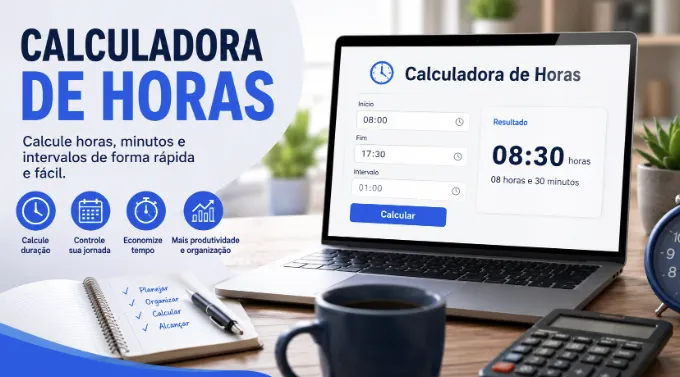
A calculadora de horas generally calculates the difference between two time values. Depending on the tool, users may also be able to enter breaks or multiple periods during the same day.
The basic process is straightforward:
- Enter the starting time.
- Enter the ending time.
- Add the break duration if applicable.
- Calculate the total period.
- Review the resulting hours and minutes.
Consider a worker who starts at 7:30 AM and finishes at 4:30 PM. The total period between these times is nine hours. If the worker has a one-hour break, the effective working time becomes eight hours.
The same principle can be applied to different schedules. Users can calculate short shifts, full working days, study sessions, project durations, or other activities that depend on accurate time measurement.
Common Working-Time Examples
Different schedules can produce different results. Understanding these examples makes time calculations easier.
| Example | Schedule | Calculated Time |
| Regular day | 08:00–17:00 | 9 hours |
| With break | 08:00–17:00, 1-hour break | 8 hours |
| Morning shift | 08:00–12:30 | 4 hours 30 minutes |
| Extended day | 07:30–18:00, 1-hour break | 9 hours 30 minutes |
| Night shift | 22:00–06:00 | 8 hours |
These examples show why simply subtracting the start time from the end time is not always enough.
Breaks must be considered when the goal is to determine actual working time. Overnight schedules also require additional attention because the end time occurs on the following day.
Understanding Hours and Minutes
One of the most common sources of confusion is the relationship between hours and minutes.
One hour contains 60 minutes. Therefore, 30 minutes represent half an hour, while 15 minutes represent one-quarter of an hour.
Some common conversions include:
- 15 minutes = 0.25 hour
- 30 minutes = 0.5 hour
- 45 minutes = 0.75 hour
- 60 minutes = 1 hour
- 90 minutes = 1.5 hours
- 120 minutes = 2 hours
It is important not to confuse clock notation with decimal notation.
For example, 1 hour and 30 minutes is not the same as 1.30 hours in decimal form. Thirty minutes represent 0.5 of an hour, so the decimal equivalent is 1.5 hours.
This distinction matters when working with spreadsheets, payroll calculations, invoices, project management software, and other systems that use decimal values.
The difference between tempo em formato de horas e minutos and horas em formato decimal is therefore important when transferring time records between different systems.
Calculating Overtime Correctly
Overtime is another reason accurate time tracking matters.
Suppose an employee has a scheduled working period of eight hours but works an additional two hours. The total time spent working that day would be ten hours, assuming there are no other adjustments.
However, overtime calculations can depend on employment contracts, applicable labor rules, collective agreements, and other circumstances. A simple calculator can determine the duration of a working period, but it should not be treated as a substitute for professional legal or payroll advice.
Keeping accurate records can still make these situations easier to review.
Workers can compare their scheduled hours with their actual hours and identify differences. Employers can also use organized records when reviewing attendance and payroll information.
Night Shifts and Overnight Schedules
Schedules that cross midnight can be more difficult to calculate manually.
Imagine a person starts working at 10:00 PM and finishes at 6:00 AM the following morning. A basic subtraction may appear to produce an incorrect result because 6:00 AM is earlier than 10:00 PM when looking only at the clock.
The calculation must recognize that the end time belongs to the next day.
This type of schedule is common in industries that operate around the clock, including healthcare, transportation, security, hospitality, manufacturing, and customer support.
When calculating overnight work, users should always verify whether the schedule crosses midnight before accepting the result.
Using Time Tracking for Productivity
Time calculations are not limited to employee attendance.
Freelancers, students, consultants, remote workers, and business owners can also benefit from tracking how they spend their time.
For example, a freelancer may work on three different projects during the same day. Recording the time spent on each project can help determine which activities require the most attention.
This information can improve:
- Project planning
- Workload management
- Client billing
- Daily scheduling
- Productivity analysis
- Deadline planning
Students can use the same approach to monitor study sessions. Someone preparing for an examination might track reading, practice questions, revision, and research separately.
Over several weeks, these records can provide useful information about personal habits.
Why Digital Time Calculations Are Useful
Manual calculations work well when there is only one simple time period. The process becomes less convenient when multiple entries, breaks, or different schedules are involved.
Digital tools reduce repetitive calculations and make it easier to obtain consistent results. Instead of repeatedly converting minutes or checking whether a shift passes midnight, users can enter the relevant times and review the calculated duration.
This can save time for people who perform these calculations regularly.
A digital tool can also be useful when checking records before entering them into another system. Users can compare the calculated duration with their own records and investigate any differences.
Building Better Time-Tracking Habits
A calculator is useful, but accurate results also depend on accurate input.
Good time-tracking habits include recording working times immediately, using a consistent time format, and checking break periods carefully.
It is also useful to keep daily records rather than relying on memory at the end of the week.
For businesses, organized records can simplify administrative work. For individuals, they can provide a clearer understanding of how their available time is distributed.
When tracking several days, reviewing the weekly total can reveal patterns that are difficult to notice from a single day’s schedule.
Final Thoughts
Accurate time tracking can make everyday planning easier. Whether someone is monitoring a work schedule, managing projects, studying, or reviewing attendance records, understanding the exact duration of each activity is valuable.
A calculadora de horas provides a convenient way to calculate time differences without relying entirely on manual arithmetic. It can be particularly helpful when schedules include breaks, minutes, overtime, or shifts that cross midnight.
The most important principle is simple: enter accurate times, understand the difference between hours and minutes and decimal hours, and always consider breaks and overnight periods when relevant.
With consistent time tracking and the right digital tools, managing working hours becomes simpler, faster, and less prone to calculation errors.
Whether you’re practicing difficult Cuphead bosses, grinding for S Ranks, or working on a speedrun, tracking your gaming time can help you see how many hours you actually spend playing. Use this hours calculator to calculate your Cuphead play sessions, practice time, and total gaming hours.